
The Securities and Exchange Board of India's (Sebi's) board on Wednesday allowed foreign portfolio investors (FPIs) to trade in exchange-traded commodity derivatives. The move, it said, "will enhance liquidity and market depth, as well as promote efficient price discovery." Overseas investors will only be allowed to deal in non-agricultural commodity derivatives and only cash-settled contracts.

Inflation trajectory, domestically as also globally, is what will shape the economy, and therefore the market, over the next couple of quarters.'

Industry players credit Sebi's first woman chairperson with putting special emphasis on cyber security, use of tech and data, areas where Sebi is trying to 'stay ahead of the curve'.

The Securities and Exchange Board of India (Sebi) could soon issue interim orders imposing a market ban on the two former fund managers of Axis Mutual Fund (MF) for suspected front-running of trades, said people with knowledge of the development. "The market regulator has gathered prima facie evidence that demonstrates that the duo has violated the integrity of the market. "While a detailed investigation is still pending in the matter, Sebi could take action under Section 11 (4) to prevent further harm to the investors and the securities market," said a source.

Overseas investors, as well as other key stakeholders, such as brokers, custodians, and clearing corporations, are yet to iron out critical issues, even as the shift towards a shorter trade settlement cycle approaches new phases. Several industry players said foreign portfolio investors (FPIs) are still facing impediments over the trade confirmation timelines, foreign exchange (forex) bookings, and pre-funding requirements. This could potentially act as a roadblock when it comes to moving entirely to the new T+1 settlement cycle from next year.

'After Covid, people started looking for bigger houses with pools and landscaped gardens.' 'Even middle class buyers are looking at plots of land in smaller towns.'
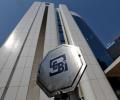
Markets regulator Securities and Exchange Board of India (Sebi) is examining allegations of front-running and other irregularities against a host of domestic fund managers across the asset management industry, said people in the know. Developments at Axis Mutual Fund have prompted the regulator to speed up probe to ensure that there is no drop in confidence in the Rs 39-trillion mutual fund (MF) industry. "We have received complaints against a few fund managers and are looking into possible violations, including those related to code of conduct," said a regulatory source, refusing to divulge names of fund houses as things are at a preliminary stage.

A 5% increase is expected due to additional interest on approval costs.

The Securities and Exchange Board of India (Sebi) has mulled introduction of confidential initial public offering (IPO) filings and "pre-filing" of offer documents, a move aimed at giving issuers flexibility and alleviating concerns around privacy. Industry players said the concept, if implemented, would give a fillip to the domestic capital markets, ease the process and encourage more companies to go public. To be sure, the proposals are still at a discussion stage with Sebi just floating a consultation paper seeking public feedback.

'For the next two years, we expect the bulk of earnings growth contribution from sectors like financials and energy, where the outlook remains positive, while the sectors which are linked to domestic consumption and are currently witnessing strains on margins have low salience for Nifty earnings.'

Logistics services provider Delhivery is likely to launch its downsized initial public offering (IPO) this week, said people in the know. The Softbank-backed firm may trim its issue size from Rs 7,460 crore to Rs 5,500 crore to align with the volatile market conditions, sources said. Sources added the fresh issue component of the IPO could be reduced to Rs 4,500 crore and the OFS component to Rs 1,000 crore.

The outbreak of the Omicron variant of the coronavirus and unprecedented lockdowns in China have roiled its equity market and also that of Hong Kong. After the crisis-hit Sri Lanka, China and Hong Kong are the worst-performing stock markets in Asia on a year-to-date basis.

LIC's $2.7-billion initial public offering (IPO) shall be the fifth-biggest globally in CY22. South Korean EV battery maker LG Energy Solution holds the record for the year's largest IPO at $10.8 billion, while Chinese mobile communications provider China Mobile IPO, which raised $8.6 billion, comes second. Dubai Electricity and Water Authority's (DEWA's) $6.1-billion IPO in March is currently the third biggest public offering for the year, followed by China National Offshore Oil Corporation's (CNOOC's) IPO; the firm had raised $5.1 billion by issuing shares in Mainland China after delisting from the American bourses.

Domestic capital market will see the launch of India's largest-ever initial public offering (IPO) next week. Life Insurance Corporation of India's (LIC's) landmark Rs 21,000-crore IPO will open for subscription on Wednesday. Here's a look at some unique features of this mega offering, which are not typically seen in other IPOs.

After years of living with his family in a poky 110 sq. ft. 'house', textile worker Sambhaji Surve dreams of moving into a home four times the size once the Maharashtra government starts its ambitious redevelopment of the 39-acre Kamathipura shanty town in south-central Mumbai. Sharing his dream are about 8,000 other families hoping for a better life when the redevelopment project, part of the government's effort to redevelop old settlements and make life more livable for some residents, gets underway. The Shiv Sena-Nationalist Congress Party aims to redevelop BDD Chawl and Dharavi but for Surve all the matters is Kamathipura where he arrived in the 1970s from Nasik to work in a textile mill. Kamathipura was originally built 150 years ago following construction of a causeway to connect the seven islands of Mumbai. From the British Raj to post-independence, it became infamous for slums and brothels.

Experts say companies wanting to launch IPOs will have to scale back their expectations given the fall in valuations.

Tata Sons has pocketed Rs 11,164 crore by tendering 24.81 million shares in the Rs 18,000-crore share repurchase programme by the group's flagship firm Tata Consultancy Services (TCS). State-owned insurer Life Insurance Corporation (LIC) tendered 1.17 million shares to take home Rs 528 crore. Small shareholders - those holding shares worth up to Rs 2 lakh - tendered 25.3 million shares in the buyback, 4.22 times the 6 million shares reserved for them in the buyback.

Once stability returns to the secondary market, companies that have obtained approval from Sebi will start tapping the market.


The Securities and Exchange Board of India (Sebi) has cleared the draft red herring prospectus (DRHP) of the state-owned Life Insurance Corporation of India (LIC). According to investment banking sources, the so-called final observations were issued by the market regulator on Tuesday evening. Following the market regulator's nod to the IPO papers, the insurer can launch its share sale. However, LIC may not launch its IPO immediately given the current volatile market conditions.
 © 2026 Rediff.com - Investor Information - Advertise with us - Disclaimer - Privacy Policy - Sitemap - Feedback - About us - Terms of use - Grievances